

Two Flat Whites

Posts Tagged ‘australian cinema’

Revelation – Perth International Film Festival

Rev is very much a work in progress. Since 1990, the event has developed from a range of alternative and independent screen culture activities and experiments to what is regarded as one of Australia’s most unique annual screen activities. Taking place in cinemas, bars and clubs around the country this strange brew embraced live music, performance, movies and all manner of strange and unusual activity.

Since 1997, audience figures for the event have increased at an average rate of 30% each year, rapidly outgrowing the intimate surrounds of the Greenwich Club. Today, the event includes in excess of 100 international films presented over 75 sessions at established cinema and nightclub venues across Perth. Revelation is Australia’s fastest growing annual film event.

It sees over 500 films submitted for selection from local and international filmmakers and includes an active, creative and argumentative screen conference component. Programmed as part of the Australian film festival season, Revelation actively interacts where possible with the Sydney, Melbourne, Brisbane and New Zealand International Film Festivals and a range of Australian screen culture organisations with program and print sources and curated projects and guests and as a result fills the gap in the development of a truly national independent screen community.

Revelation was (and still is)  concerned with the conservative nature of film distribution and exhibition practice in Australia. It has always sought to deliberately challenge current marketplace modes and biases through unusual and contextualised screening concepts, focused curation and active interaction with industry guilds, independent curators, the academic community and other Arts related activity and practitioners.

Revelation maintains its focus on progressive and inspiring works and embraces audiences of all ages, tastes and backgrounds. Like the films it presents, the event maintains an energy and enthusiasm for the industry quite unlike any other film festival in the country.

What: Revelation – Perth International Film Festival
When: 8th till 18th July 2010
Where: In & around Perth
Cost: Varies
Pene Patrick talks with Two Flat Whites

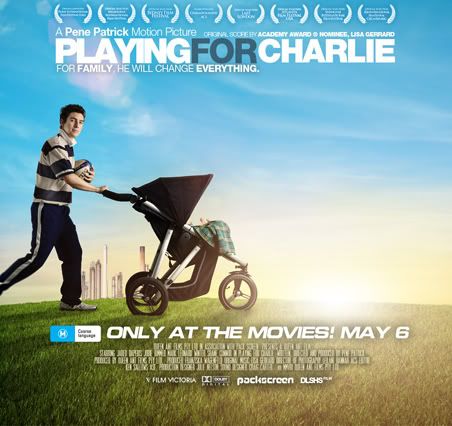
Writer/Director Pene Patrick feels that truth should be at the heart of good Australian cinema.  Her debut film, Playing for Charlie , delves into the life of working-class Melbourne teenager, Tony Hobbs, as he struggles to find a balance between caring for his dependent family, and pursuing a rare opportunity for personal triumph.

An important new voice has emerged in the Australian film industry – one that looks poised to tear apart the current model of chasing the next blockbuster and set about creating a culturally-enriching body of work.

Two Flat Whites chats with Pene Patrick…

TFW:  Playing for Charlie is a humble film but it’s very strong in heart.  This is your directorial debut for a feature-length film.  You also wrote the screenplay.  Have you always written from such raw emotional territory?

Pene Patrick:  Well I think I’ll always go to the heart of a character.  That’s when I most lose interest in a film, when they haven’t gone to the heart of a character, and instead they’re being used to comment on something.

TFW:  How did you develop your writing?

Well it developed through my acting training which involved a very intense and serious training period in New York.  I was taught to look for the truth of humanity and the truth of the character in a situation.

TFW:  The actor who plays Tony Hobbs, Jared Daperis, resonates on the screen.  He seems an odd choice for the part, but it really pays off.  Was this intentional?

I think I cast him because he’s not a stereotype.  I see a lot of stereotypes in Australian films.  He has an international universality about him.  The thing that really excited me is that he has a boy / man quality: a wisdom.  He was an embodiment of everything I was trying to do in the film.

TFW:  I think his performance guides the wonderful score, written by Lisa Gerrard.

Yes her score is a character in the film, that’s what I love about it.  She’s brought another level to the narrative.  She’s come in and given a lovely river for everything to flow.

TFW:  It reminded me of Jane Campion’s ‘Bright Star’ in that respect.

Oh lovely, thank you.

TFW:  Audiences for Playing for Charlie are responding positively to the optimism in the film.  I did too, although I found some elements melancholic, particularly the Thomas Gray poetry whispered at one point; “Full many a flower is born to blush unseen”.  I felt this line reflected the fate of many disadvantaged young Australians: kids who don’t have the full opportunities to explore their talents.

Yes that was the core note from which the film sprung from.  But I also want the audience to see that it’s not always the case and that it is possible to move forward.  Tony is so certain and has a solid rock faith which I attribute to his upbringing and his relationship with his father.  These are good elements in this boy from a working-class background.  It’s actually a very positive statement about working-class values, so it’s very uplifting in that way.

TFW:  Producer Jan Chapman recently encouraged Australian film-makers to be “courageous and challenging,” and to “keep an Australian national spirit whilst appealing to an international audience.”  Do you agree with her?

Yes, and I think the issues in Playing for Charlie are universal.  It transcends race, class, and spirituality.  Tony’s boy to man journey is everyone’s journey.  It’s such a crucial time, the boy to man phase.  Playing for Charlie is about the struggle to protect that which is really vulnerable in us – whether that is our sex, or our race, or our art.

TFW:  Do you think films can make a difference?

Yes they get the issues out there.  Playing for Charlie explores the difficulties relating to young carers.  Since the film opened we have had a letter from the Minister for Health’s office – two years ago they provided a lot more resources and money to aid young carers.  Radio National has done a program on young carers.  There are thousands of people in Tony Hobbs’ situation in Australia so it’s important to tell these honest stories and bring greater awareness.

Playing for Charlie is in limited theatrical release at the Cinema Nova in Carlton, Melbourne.

Interview by Ryan Nance.

Coffin Rock tickets sent out!

Our competition for the Coffin Rock movie tickets has now closed. Thank you to everyone that entered we had an overwhelming response. The winners are listed below and your prizes will be sent this week. Thanks again to Jameson PR for your generous support!

P.Matheos – Penshurst, NSW
S. Leong – Randwick, NSW
E. Bakkalis – Dingley Village, VIC
D. Hadiwibawa – Narellan Vale, NSW
J.Emmerson – Putney, NSW
L.Limas – Kardinya, WA
T.Lee – Concord, NSW
S.Southwell – Seaton, SA
R.Sheridan – Port Macquarie, NSW
N.Fenwick – Burney, TAS

Looking For Eric tickets giveaway

Two Flat Whites in conjunction with our friends at Icon Films are giving ten (10) lucky people the chance to win one of 10 double passes to the hit film Looking For Eric in cinemas from the 24th September 2009.

Eric the postman is slipping through his own fingers…

His wife has gone, his stepsons are out of control and the house was chaotic even before a cement mixer appeared in the front garden. Life is crazy enough, but it is Eric’s own secret that is driving him to the brink. How can he face up to Lily, the woman of his dreams that he once loved and walked out on many years ago? Despite the comical efforts and misplaced goodwill of his mates, Eric continues to sink.

In desperate times it takes a spliff and a special friend to help a lost postman find his way, so Eric turns to his hero: footballing genius, philosopher and poster boy, Eric Cantona.

As a certain Frenchman says “He who is afraid to throw the dice, will never throw a six.”

Please email your name, postal address and where you heard about the competition to info for your chance to win!

Competition closes Sunday, 27th September 2009.


Sydney Underground Film Festival 2009

The 2009 Sydney Underground Film Festival will take place from Thursday 10 September to Sunday 13 September at Sydney’s popular underground haunt, The Factory Theatre.

The Sydney Underground Film Festival provides a platform for exhibition, exposure and critical discussion and is organised by a committed group of filmmakers, who understand the need for a sustainable and thriving alternative film culture. The organisers are devoted to renewing local interest in independent and experimental film as part of an international underground film culture.

The festival will only program unique, quality independent films that transgress the status quo and challenge the conservative conventions of filmmaking. The festival aims to change an engrained culture of cinematic complacency and revitalize an enthusiasm for cinema.

Brisbane International Film Festival 2009

Check out the latest and best in world cinema, documentaries, retrospectives, experimental work, late night thrillers, animation, children’s films, a short film competition and much more! BIFF provides a focus for film culture in Queensland by showcasing the best and most interesting cinema from around the world. Each year St.George Bank BIFF draws film enthusiasts to view an entertaining mix of local and international films, retrospectives and colourful events that embrace the vibrant art of filmmaking.

Since the first festival in 1992, more than 350,000 film-goers have immersed themselves in the BIFF experience. St.George Bank BIFF has become a well-renowned Australian festival, launching films like The Full Monty, The Usual Suspects, Doing Time for Patsy Cline, Feeling Sexy, Gettin’ Square, In America, A Prairie Home Companion, Fay Grim and Where in the World is Osama bin Laden?.

Brisbane International Film Festival opens today with the charming coming of age film AN EDUCATION directed by Lone Scherfig and based on a script by Nick Hornby. Starring new talent Carey Mulligan, Peter Sarsgaard and Alfred Molina it is set against the backdrop of swinging sixties London.

The “Colourise BIFF” strand has been programmed in conjuction with the “Colourise Festival” and presents films made by or about indigenous people from around the world including Marco Bechis’s BIRDWATCHERS about the tensions that arise when the indigenous Guarani-Kaiowa community attempts to reinhabit their land in Takuara, Brazil.

Other international highlights include Claire Denis’ 35 SHOTS OF RUM, Costa Gavros’ EDEN IS WEST, Ken Loach’s LOOKING FOR ERIC, and Jerzy Skolimowski’s FOUR NIGHTS WITH ANNA, and Venice 2008 favourites Ramin Bahrani’s GOODBYE SOLO and Agnes Varda’s THE BEACHES OF AGNES. There is also a chance to see parts 1 & 2 of Steven Soderbergh’s epic CHE starring Benecio Del Toro as the young revolutionary.

While new Australian cinema goes from strength to strength with inclusions of Ana Kokkinos’s gritty portrayal of the complicated relationships between children and their mothers in BLESSED, Jonathan Auf der Heide’s Tasmanian convict drama VAN DIEMEN’S LAND and David Caesar’s truckin’ great PRIME MOVER – an love story with action and drama and a lot of big roadtrains!

Focus on girls 24/7

From desperate housewives to rampaging teenage anarchists, ‘the girls’ are up front in these stylistically brazen films by women directors from the sixties and early seventies.

The films brought together in Focus on Girls 24/7 each signal a unique creative vision behind the lens. The contradictory impulses of the modern woman are rendered on screen in bold, unfettered performances from the leading actresses.

Friday 3rd July to Sunday 12th July 2009
ACMI Cinemas
Federation Square, Flinders Street, Melbourne
Full $13, Concession $10
6 session packages also available: Full $60 or Concession $48

Sydney Film Festival 2009

This year is the 56th Sydney Film Festival, making it one of the longest running events of its kind in the world.

Each year the festival brings the best new films from around the world to audience’s right here in Sydney. As well as brand new features from over forty countries, we screen short films, Australian films, documentaries and archive titles, many of which are recently restored. The festival hosts a number of awards to recognise excellence in filmmaking, including the Dendy Awards for Australian Short Films, (which are Academy Award eligible!) and the Official Competition, which celebrates ‘courageous and audacious filmmaking’.

The Sydney Film Festival runs until the 14th June 2009. Do yourself a favour and catch a film!

Dungog Film Festival – Allanah Zitserman

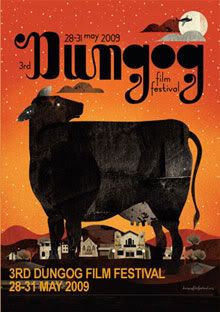
The Dungog Film Festival is an annual 4-day festival held in the cosy northern NSW town of Dungog – in the Hunter Valley region.  It screens only Australian movies (both unreleased and classics), and puts an emphasis on bringing the film-maker and the film-goer together.  As the festival is about to launch into its 3rd year (28th May to 31st May 2009), Two Flat Whites had a chat to festival director and co-founder, Allanah Zitserman.


First of all, the whole concept of the Dungog Film Festival (DFF) is just so un-pretentious and refreshing. The relaxed and welcoming vibe you guys have created feels very Australian, was this exactly how you and Stavros Kazantzidis (co-founder of the DFF) envisioned it to be? How did this idea come about?

Yes, this was the basis of our original vision for the event. Stavros and I came at it from two key perspectives; the filmmaker and the Aussie filmgoer. We thought about what would we want from an Australian film festival and four key things sprung to mind. One was that we wanted an event that was non-competitive, stripped of any rivalry. We felt that just having the opportunity to be a part of the local film industry was a prize in itself. We also felt that in order to move into the future of cinema we needed a context of our past and that was the reason for showcasing films from the past and including established filmmakers in the program. We wanted an event outside of the hustle and bustle in a friendly relaxed environment. Finally we wanted to put the focus on the dynamic and diverse and extremely valuable Australian film industry. With these four ingredients we hoped that we would create a completely original event that helped bridge the gap between filmmakers and filmgoers and at the same time bring the film community closer together.

It sounds like the entire population of Dungog embraces the festival with open arms. In fact, with only 50 actual tourist beds in the town, the people of Dungog offer cheap accommodation for visitors, in their own homes.  Shop-keepers adorn their window-fronts with Australian film-themed displays.  Cinema has always had the potential to create a feeling of unity amongst a community.  Do you feel the giant multiplex cinemas so prevalent today have taken away some of that purity, or magic?

We are very lucky to have such a great community to work with in Dungog and their commitment and involvement in the festival has been part of what makes it so unique.  There is something magical about going to a community cinema, whereas multiplexes provide a very different experience for cinemagoers. I think that each has a place in today’s society but there’s no doubt that with community cinemas there is an intimate feeling like you’re going to a friends place to watch a film which is refreshing.

Whilst the DFF seems to be all about relaxing and watching movies in a picturesque country town, it is also a great opportunity for film-makers to build some hype on their unreleased films. The buzz surrounding the screening of ‘The Jammed’ at last year’s festival went a long way to securing national distribution for the film. What has this meant for the level of interest you now receive from film-makers, as well as distributors?

The festival is set up for helping build a healthier local industry. It aims to connect screen industry practitioners and give films looking for distribution a platform to be discovered.  Dungog achieves significant national coverage and can be very useful in assisting distributors with their release strategies. Last year Unfinished Sky was included in 85% of national coverage achieved for the event. This contributed to the film becoming the second highest Australian-produced box office earner of 2008. The level of interest from filmmakers that don’t have distribution has increased but the distributors are still playing it safe choosing city based festivals over Dungog. I believe this will change as the festival matures.

Speaking of distribution, I read that you and Stavros started your own film distribution company, the Australian Film Syndicate (AFS), as a result of the growing success of the DFF. The AFS handled the distribution for the recent Australian film ‘The Combination’. The film was only screened in specific suburbs in Sydney and Melbourne – areas in which you felt people would be interested to see the film. This is quite an original strategy. Do you feel that it worked well for ‘The Combination’, and will this be a strategy the AFS will use into the future?

The strategy for The Combination was very effective. The film was the Number 1 earner against US product at the NSW sites it was playing in its first few weeks.  We believe that each film requires a very unique strategy that makes sense to reaching its desired audience. AFS is not interested in formula distribution it carefully constructs its release strategies specifically to the target audiences.

It’s no secret that the relationship between the Australian film industry and the general Australian population isn’t very healthy. Over the last 10 years, just 4% of Australia’s box office revenue has come from Australian films.  Do you see a positive future for our film industry?

There’s no denying it has been a pretty bad few years for the Aussie film industry. I do believe that things are changing and we are already seeing that with the strength of the work being released in 2009. I also am encouraged about the marketing focus being made by Screen Australia. I’ve always felt part of the issue is the fragmentation within the local community.  Part of the reason Stavros and I decided to start the festival was to help build bonds within the film community. Encouraging dialogue, making real connections and being honest with each other will help us inspire each other creatively and together we will find ways to help build a healthier industry.

Final question – what were some your personal highlights of last year’s festival, and what are you most excited about for this year?

The opening night with Unfinished Sky was a real winner as was the NSW Mining’s party on Saturday Night — people are still talking about it.  The whole program this year is super exciting. I can’t wait for audiences to sink their teeth into it.

Dungog is located 228 km north of Sydney – 3 hours by car or train.  You can find all ticketing, accommodation and festival program information on the official Dungog Film Festival website .  We hope to see you there!

Interview by Ryan Nance.

Focus on ozploitation!

Co-presented with the Melbourne International Film Festival, lashings of gratuitous sex, violence and fuel-injected muscle car mayhem – the 70s and 80s Aussie exploitation films that broke all the taboos. Co-curated by director Mark Hartley and inspired by his long awaited documentary Not Quite Hollywood, these legendary works smash their way back onto the big screen after prowling the filmic wilderness for decades.

ACMI is the Australian Centre for the Moving Image . From the wonders of more than a century of cinema, to television, computer games and the screen-based art of the future, ACMI is the place to find out everything about the moving image. The films run from Friday 25th July to Sunday 10th August 2008.

· Copyright 2007 - 2008 © Two Flat Whites · Website designed by Kinski & Bourke