Two Flat Whites

Posts Tagged ‘australian film’

◄ Previous Entries Next Entries ►

Looking For Eric winners announced

Our competition for the Looking For Eric movie tickets giveaway has now closed. Thank you to everyone that entered we had an overwhelming response. The winners are listed below and your prizes will be sent this week. Thanks again to Icon Films for your generous support!

S. Clifton – Main Beach, QLD
A.Marsh – Bellevue Hill, NSW
E. Bakkalis – Dingley Village, VIC
E. Crocker – Gunn, NT
C.Amor – Wollongbar, NSW
M.Lubcke – Pooraka, SA
S. Beneke – Bathurst, NSW
M. Gatton – Fremantle, WA
J. Doolan – Geelong, VIC
D. Smithson – Grafton, NSW

Filmmakers apply within

An exciting new opportunity exists for dynamic, passionate and creative filmmakers and videographers to showcase their talents to a massive Australian audience and maybe snare themselves a once-in-a-lifetime prize.

All you need to do is put together a short, compelling video (2 minutes approx.) that dynamically illustrates who you are, where you come from and what sets you apart. Show us why we should choose you to embark on the filmmaking adventure of a lifetime by utilising your fresh, unique thinking and shooting skills.

We’re looking for entertaining, original yet accessible stories … exactly how these are presented is entirely up to you! If you’re successful, then the world could be your oyster!

We are looking for individuals or teams of two who are the full production package. We’d prefer you write, star, shoot, edit and deliver your vision without any other person assisting you. Your films can feature performances or interviews from third parties if this is a style you choose to explore.

What are you waiting for – grab your camera, get thinking and GO! Applications must arrive no later than 25th September 2009.

Human Rights Arts and Film Festival – Call for entries

The Human Rights Arts and Film Festival (or her-aff as we like to call it) was founded in 2007 by Evelyn Tadros, Naziath Mantoo and a dedicated team of passionate her-aff-ers who had a vision to make human rights accessible, relevant and significant to the broader Australian community. Australia’s freshest and most important Festival is just around the corner! Bringing you the boldest films and artwork from Australia and around the globe, HRAFF will challenge, touch and inspire audiences from all walks of life.

Submissions for the Human Rights Arts and Film Festival (HRAFF) are now open! All emerging and established filmmakers with a passion for human rights are encouraged to enter. HRAFF is looking for music videos, shorts, features and documentaries to include in its 2010 Festival program. The only criterion is that the film engages with human rights and social justice issues. In 2010, HRAFF will again travel Australia wide with events and screenings taking place in Melbourne, Sydney, Canberra, Adelaide, Perth and Brisbane. There is also over $5000 worth of cash and prizes up for grabs!

Earlybird Deadline: 4th September, 2009 – cost $10
Final Deadline: 6th November, 2009 – cost $20

Melbourne International Film Festival 2009

The Melbourne International Film Festival (MIFF) is an iconic Melbourne event. MIFF hosts a feast of cinematic delicacies from over 50 countries for seventeen days, heavily garnished with a range of parties and special events that cast a celebratory mood over the city. The Festival enjoys over 185,000 people every year, making it one of Melbourne’s significant public events.

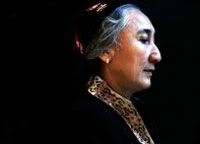
Drama has hit this year’s festival with the Chinese Government demanding that the festival dump a documentary about an exiled minority leader that they label a terrorist and blame for instigating this month’s ethnic riots in Xinjiang, which left more than 180 people dead.

The Australian film about millionaire Uighur businesswoman and Grandmother Rebiya Kadeer , who was once feted by the Chinese Government as an example of ethnic harmony in China, is scheduled to premiere on August 8.

Festival director Richard Moore said the Chinese consulate in Melbourne phoned him late on Friday after the festival’s full program was published in The Age, insisting that the documentary, The 10 Conditions of Love , be withdrawn.

The consular official, Ms Chen, who is believed to be the new Melbourne cultural attaché, demanded that Mr Moore justify his decision to include the film. She also castigated him for allowing Ms Kadeer to be a guest of the festival. Ms Kadeer is due in Melbourne next month to speak at the premiere.

The Melbourne International Film Festival runs from the 24th July to 9th August 2009.

What happens in Dungog stays in Dungog!

As I reflect on the four days I spent at the 2009 Dungog Film Festival, it is the above quote – from festival director Allanah Zitserman – that seems to be the easiest way to describe my experiences to you all.

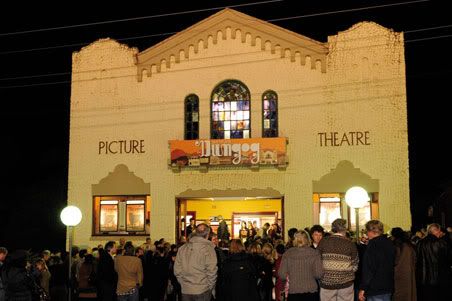
Dungog is unlike any other film festival I have been to.  I saw many great Australian films, met many interesting people (film-makers, film-goers, and local residents), and listened to many enlightening film industry discussions.  What made it unique was that all of this took place in a small, northern-NSW rural town, three and a half hours out of Sydney.  This was not the Dendy in Newtown (my local inner-city cinema), this was foreign turf, and I was a wide-eyed tourist having my own little personal adventure.  I’m sure that every single one of the 6,000 people that flocked to the festival this year had their own personal adventure as well.  It’s the sort of thing that you really need to experience for yourself.

(more…)

My Year Without Sex – Sarah Watt interview

Our friends at 3CR interviewed writer and director Sarah Watt in her new Australian film ‘My Year Without Sex’ . Starring Matt Day and Sacha Horler, if you are looking for a laugh, the humour is wry and infectious.

‘My Year Without Sex’ comes out in Australian cinemas on the 28th of May. How are preparations going in the lead up to release? Is anticipation building?

Yeah, I think so. We had some preview screenings this weekend. So, people are starting to see it, which is very exciting – and nerve wracking!

I happened to catch one of those preview screenings and I’m happy to report that there was a lot of laughter in the cinema – at all the right parts.

That’s good! That’s very good.

The title of the film came from the fact that you didn’t want to direct another sex scene – why is that the case?

It came out of a joke about directing sex scenes. I think they’re very hard to do well. Often, they’re done really badly. It’s hard not to be clichéd so; I didn’t want to try, because I don’t think I’m a good enough director. But then, how do you make a film without a sex scene in it? You just call it, ‘My Year Without Sex’! So, it was kind of a joke at the start but in the end it worked really well with the content and the themes that I wanted to explore about consumerism and anxiety and all those things. Sex kind of belongs in there.

(more…)

Dungog Film Festival – Allanah Zitserman

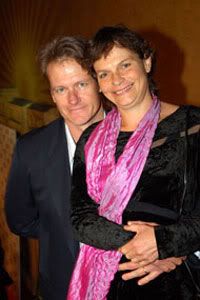
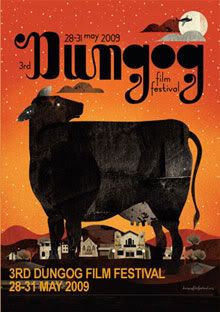
The Dungog Film Festival is an annual 4-day festival held in the cosy northern NSW town of Dungog – in the Hunter Valley region.  It screens only Australian movies (both unreleased and classics), and puts an emphasis on bringing the film-maker and the film-goer together.  As the festival is about to launch into its 3rd year (28th May to 31st May 2009), Two Flat Whites had a chat to festival director and co-founder, Allanah Zitserman.


First of all, the whole concept of the Dungog Film Festival (DFF) is just so un-pretentious and refreshing. The relaxed and welcoming vibe you guys have created feels very Australian, was this exactly how you and Stavros Kazantzidis (co-founder of the DFF) envisioned it to be? How did this idea come about?

Yes, this was the basis of our original vision for the event. Stavros and I came at it from two key perspectives; the filmmaker and the Aussie filmgoer. We thought about what would we want from an Australian film festival and four key things sprung to mind. One was that we wanted an event that was non-competitive, stripped of any rivalry. We felt that just having the opportunity to be a part of the local film industry was a prize in itself. We also felt that in order to move into the future of cinema we needed a context of our past and that was the reason for showcasing films from the past and including established filmmakers in the program. We wanted an event outside of the hustle and bustle in a friendly relaxed environment. Finally we wanted to put the focus on the dynamic and diverse and extremely valuable Australian film industry. With these four ingredients we hoped that we would create a completely original event that helped bridge the gap between filmmakers and filmgoers and at the same time bring the film community closer together.

It sounds like the entire population of Dungog embraces the festival with open arms. In fact, with only 50 actual tourist beds in the town, the people of Dungog offer cheap accommodation for visitors, in their own homes.  Shop-keepers adorn their window-fronts with Australian film-themed displays.  Cinema has always had the potential to create a feeling of unity amongst a community.  Do you feel the giant multiplex cinemas so prevalent today have taken away some of that purity, or magic?

We are very lucky to have such a great community to work with in Dungog and their commitment and involvement in the festival has been part of what makes it so unique.  There is something magical about going to a community cinema, whereas multiplexes provide a very different experience for cinemagoers. I think that each has a place in today’s society but there’s no doubt that with community cinemas there is an intimate feeling like you’re going to a friends place to watch a film which is refreshing.

Whilst the DFF seems to be all about relaxing and watching movies in a picturesque country town, it is also a great opportunity for film-makers to build some hype on their unreleased films. The buzz surrounding the screening of ‘The Jammed’ at last year’s festival went a long way to securing national distribution for the film. What has this meant for the level of interest you now receive from film-makers, as well as distributors?

The festival is set up for helping build a healthier local industry. It aims to connect screen industry practitioners and give films looking for distribution a platform to be discovered.  Dungog achieves significant national coverage and can be very useful in assisting distributors with their release strategies. Last year Unfinished Sky was included in 85% of national coverage achieved for the event. This contributed to the film becoming the second highest Australian-produced box office earner of 2008. The level of interest from filmmakers that don’t have distribution has increased but the distributors are still playing it safe choosing city based festivals over Dungog. I believe this will change as the festival matures.

Speaking of distribution, I read that you and Stavros started your own film distribution company, the Australian Film Syndicate (AFS), as a result of the growing success of the DFF. The AFS handled the distribution for the recent Australian film ‘The Combination’. The film was only screened in specific suburbs in Sydney and Melbourne – areas in which you felt people would be interested to see the film. This is quite an original strategy. Do you feel that it worked well for ‘The Combination’, and will this be a strategy the AFS will use into the future?

The strategy for The Combination was very effective. The film was the Number 1 earner against US product at the NSW sites it was playing in its first few weeks.  We believe that each film requires a very unique strategy that makes sense to reaching its desired audience. AFS is not interested in formula distribution it carefully constructs its release strategies specifically to the target audiences.

It’s no secret that the relationship between the Australian film industry and the general Australian population isn’t very healthy. Over the last 10 years, just 4% of Australia’s box office revenue has come from Australian films.  Do you see a positive future for our film industry?

There’s no denying it has been a pretty bad few years for the Aussie film industry. I do believe that things are changing and we are already seeing that with the strength of the work being released in 2009. I also am encouraged about the marketing focus being made by Screen Australia. I’ve always felt part of the issue is the fragmentation within the local community.  Part of the reason Stavros and I decided to start the festival was to help build bonds within the film community. Encouraging dialogue, making real connections and being honest with each other will help us inspire each other creatively and together we will find ways to help build a healthier industry.

Final question – what were some your personal highlights of last year’s festival, and what are you most excited about for this year?

The opening night with Unfinished Sky was a real winner as was the NSW Mining’s party on Saturday Night — people are still talking about it.  The whole program this year is super exciting. I can’t wait for audiences to sink their teeth into it.

Dungog is located 228 km north of Sydney – 3 hours by car or train.  You can find all ticketing, accommodation and festival program information on the official Dungog Film Festival website .  We hope to see you there!

Interview by Ryan Nance.

A Fair Combination?

“Film should act as a mirror to society, it should make people think”

I heard this quote – by Greek director, Carlos Gavros – via Australian film critic, David Stratton, during one of his film history lectures in 2008.  As some time passed, and my passion for cinema matured, this quote (or even mission statement) has become more and more resonant with me.  Film, as a medium, became more than simply a 90 minute cinema experience; it became an experience which got me thinking about the structure of our society.

I recently traveled out to Bankstown (a suburb in Sydney’s west, and one of Australia’s most culturally diverse areas), to see the Australian film ‘The Combination’.  The film is set and shot in another western Sydney suburb, Parramatta.  In fact, it was screened exclusively in these suburbs (apart from one inner-city arthouse cinema) – with distributors deciding that only those residing there would want to see it.

Put simply, ‘The Combination’ is not a technically brilliant film, it will not revolutionise Australian cinema (at least not in the conventional sense).  Yet David Stratton awarded it 4 ½ stars.  This is because the film explores issues both real and relevant – the structure of contemporary Australian society: where we are at as a country, and what the concerns are as the cultural demographics evolve.

‘The Combination’ focuses on the clash of cultures between Lebanese-Australians and white Anglo-Australians.  It is set during 2005, at the time of the infamous race-related riots in Cronulla, in Sydney’s south.  The story – written from personal experience by George Basha – follows the struggle of 2 Lebanese brothers as they try to find their place within Australian society.  Established Australian actor, David Field, directs the film; a role he gravitated towards because he strongly felt that similar social struggles could be understood by Vietnamese-Australians, Indian-Australians, African-Australians, South American-Australians, and so on and so on.  During meetings with George Basha, Field was surprised to learn that Basha had not seen the Australian films he was raising for discussion.  “Why would I, we [Lebanese-Australians] aren’t in any of them”, Basha retorted dismissively.  Field was silenced, as he realised that Australian films were not adequately portraying contemporary Australian stories.  It was this realisation that further solidified his drive to get the film made, despite a total lack of support from the Australian film industry funding bodies.

Australian cinema has a proud history of making quality human dramas; films which can confidently stand up to the esteem of European productions.  It would be great if we can continue this tradition with our eyes and ears open to the constantly changing nature of the structure of our society.  In doing so, we would be inviting our culturally diverse peoples to participate in, and embrace, our film industry.  ‘The Combination’ is one example of a full-length Australian feature film which explores the contemporary issue of racial tensions in Sydney’s western suburbs.  It will also be great when we start to see stories with universal themes (such as love, mistrust, and infidelity) featuring similar minority groups.  I look forward to seeing a ‘Lantana’ set in Bankstown.  Let’s advance Australia with a fair combination of cultures represented in our films.

Article written by Ryan Nance

You can also check out Two Flat Whites interview with one of the stars from The Combination, Clare Bowen here.

Also check out George Basha’s interview here .


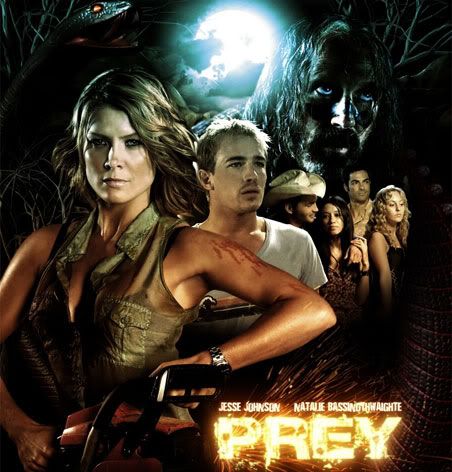
Prey – Natalie Bassingthwaighte

Prey tells the story of six friends who head to the outback on a four-wheel drive adventure and come face-to-face with an ancient supernatural evil.  The three couples drive into a sacred site where they unknowingly awaken a 5000 year-old curse. Inspired by true unsolved events, Prey follows the group of 20-something’s into a vortex of serpentine fear; afterlife and psychological confrontations that make them question what is real and what is imagined.

Starring Aussie superstar Natalie Bassingthwaighte and US heart-throb Jesse Johnson, Prey is Bassingthwaighte’s first feature film. Of the experience, she says she embraced the challenge immediately and is looking forward to seeing it in cinemas. “I really enjoyed the opportunity and challenges of making my first film; I can’t wait to see it on the big screen. Prey is targeted towards teenagers but it easily appeals to anyone who enjoys thrillers. “This was my first film, so as an actor you tend to pocket your own instincts and rely more on the advice and vision of the film maker. Making Prey was a great experience and I hope it’s well-received,” says Bassingthwaighte.

Filmed in Victoria and central Australia, the film stars Natalie Bassingthwaighte as Kate, Jesse Johnson (Nash Bridges (with father Don Johnson), Redline) as Gus, and in supporting roles, Christian Clark (Squid and Gabriel) as Jason, Natalie Walker as Ling, Ben Kermode as Matt, Kristen Sargent as Annika, with guest appearances by the legendary Nicholas Bell, Dawn Klingberg and world poker champion, Joe Hashem.

Prey premieres in cinemas on the 5th May in Sydney and on the 7th May in Melbourne. The movie will run for a strictly limited season at selected cinemas throughout Australia ahead of the film’s DVD release.

Warwick Thornton talks film!

Warwick Thornton loves the nervousness and adrenaline in putting together a film. Warwick has won a number of awards including Best Emerging Talent; he also won Best Short Film at the 2007 Inside Film (IF) awards in Queensland as well as the 2008 Best Short Film award at the prestigious Berlin International Film festival for his short film ‘Nana’. Warwick Thornton is currently preparing for his first feature film to hit the big screen, Samson and Delilah which features in cinemas around the country on the 7th May 2009.

Where did you grow up & where do you hang your hat?

Alice Springs

In your own words, what do you do?

Work to fill my fridge.

Where did you learn your craft?

On the job at CAAMA in Alice Springs. Then studied Cinematography at AFTRS in Sydney.

Who inspires you?

Inspiring people.

Childhood Memories:

TV Show – Captain Harlock, Astro Boy

Hobby – Moto cross desert racing

Food – Soya chicken

Fear – High places. Low places.

People – Drunks & dope heads.

Defining moment – Realising I can do whatever the fuck I want.

Schooling memories, chore or cherished?

Chore: Evil teachers
Cherish: Angel teachers
Where is the most beautiful place in Australia you have visited?

Coober Pedy

From the hours of 9am to 5pm, what do you get up too?

Get up, have a coffee, take my daughter to school. Work a bit, make lunch, wander ‘round. Work a bit more, sometimes. Pick my daughter up from school.

You seem to have a passion in making movies about your community & sharing this on the big screen. What messages do you want people to digest?

No messages – just that we all belong on the same planet and should look out for each other.

Love is the most important thing. And survival. It was really important in Samson & Delilah that they survived through their love for each other and that they saved themselves and solved their own problems.

Who are your favourite film personalities? And is there anyone we should keep a look out for in Australia?

I don’t really have favourite film personalities. The little girl in My Year Without Sex is pretty cool.

Where can people see your work?

In cinemas from May 7th – Samson & Delilah.
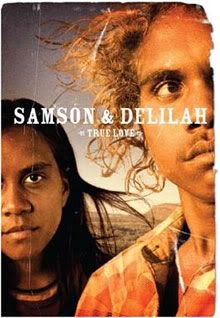
For love or money?

I love money.

What future endeavors are in the pipeline?

Breath, eat, drink.

Shooting and directing a doco series Art & Soul about Aboriginal art with Hetti Perkins.

Where do you see yourself in 5 years?

Alive, happy, older.

If you could invite 3 people to chat over coffee, who would they be & why?

My wife Beck, daughter Luka and producer Kath and all their split personalities.

Coffee or Tea?

Bushells Leaf Tea, two white sugars and powdered milk.

You can also check out our film reviews written by two of our young writers.

Samson & Delilah – Film Review by Hayley Van Es

Samson & Delilah – Film Review by Ryan Nance

◄ Previous Entries Next Entries ►
· Copyright 2007 - 2008 © Two Flat Whites · Website designed by Kinski & Bourke